


Well yield and the pumping test
To choose a pump you need the performance results of the well, not just its depth. The pumping test should leave a record of the flow, the time and the water level.
Four values that must not be mixed up
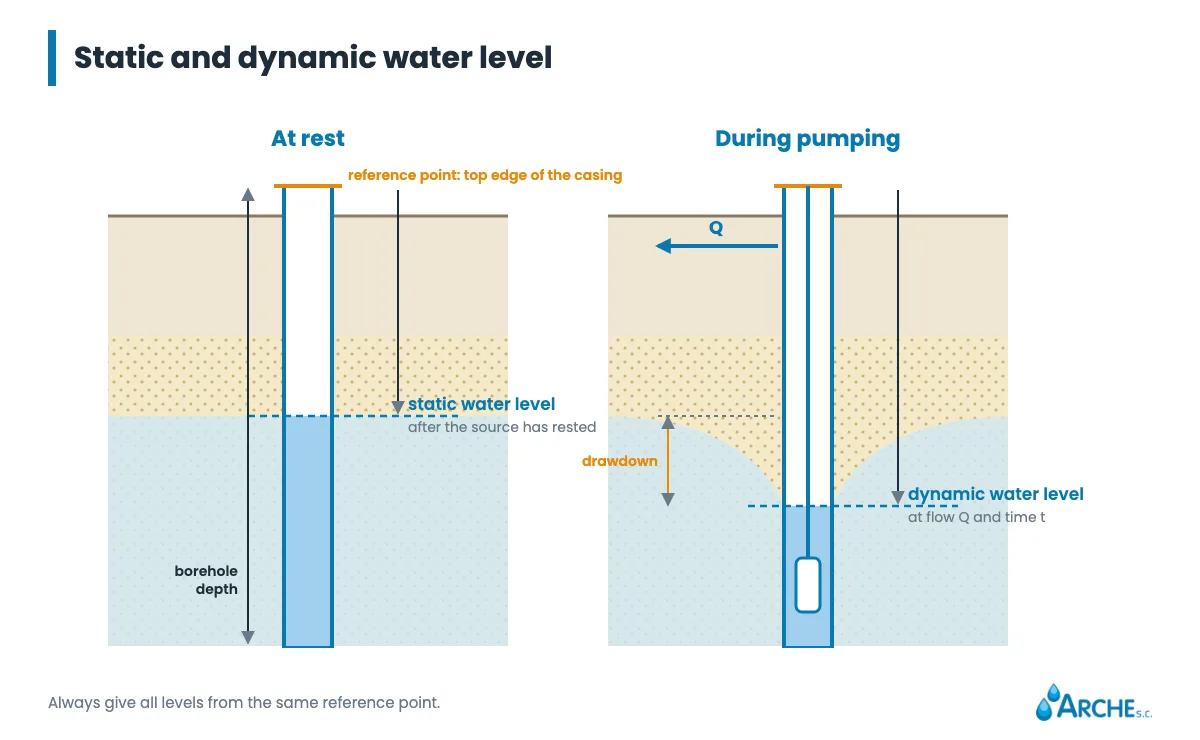
| Parameter | What it describes |
|---|---|
| Borehole depth | The distance to the bottom, not the pump's head. |
| Static water level | The water level after the water source has rested sufficiently. |
| Dynamic water level | The water level at a given flow and pumping time. |
| Yield from pumping | The flow obtained under the recorded test conditions. |
What to ask the contractor for
Ask for the date of the test, how the flow was measured, the pumping time, successive water level readings and observations of turbidity and sand. It is also worth keeping the record of how the water level recovered after switching off. A bare note saying “there is water” does not describe the operating conditions of the installation.
Every level must be given against a common reference point, for example the top edge of the pipe. A measurement from ground level and a measurement from the protruding pipe can give different numbers without any real change in the water level.
How the result affects the equipment
The planned pump flow has to be related to the confirmed capacity of the water source. With higher demand you can consider changing the watering hours, dividing the garden into sections or a suitably designed water storage tank. A more powerful pump does not by itself increase the inflow into the well.
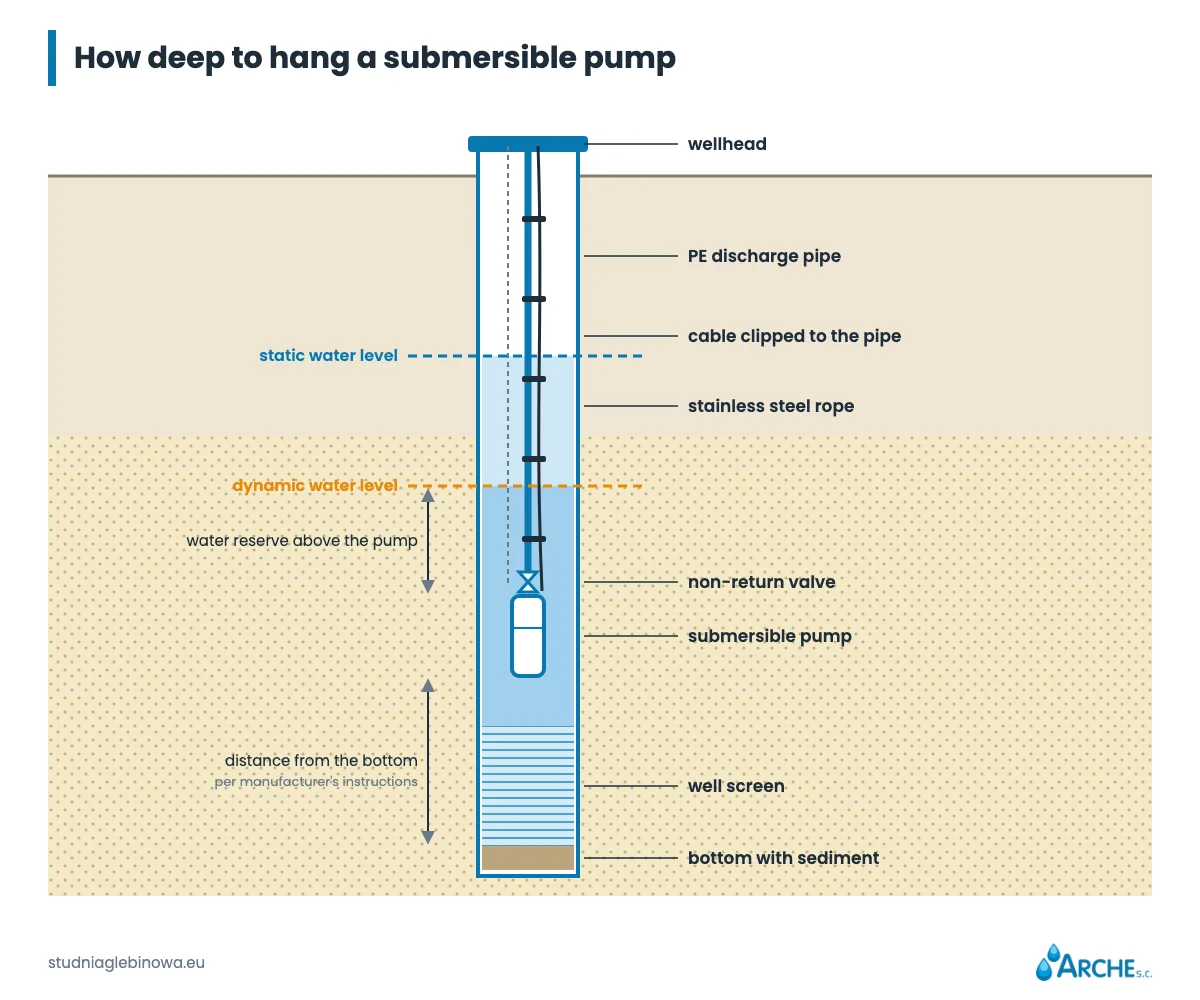
The setting depth is chosen taking into account the dynamic level, the construction of the borehole and the pump manufacturer's requirements. In the calculator, do not replace a missing dynamic level with the depth of the whole well.
Keep the reference point for the future
The acceptance result will be useful if the flow drops after some years. Compare measurements taken in similar conditions and at a similar rate of draw. A one-off result is not a promise of unchanging yield in every season.
Sources:
Checked 8 October 2026