


Water treatment: data for selection and handover
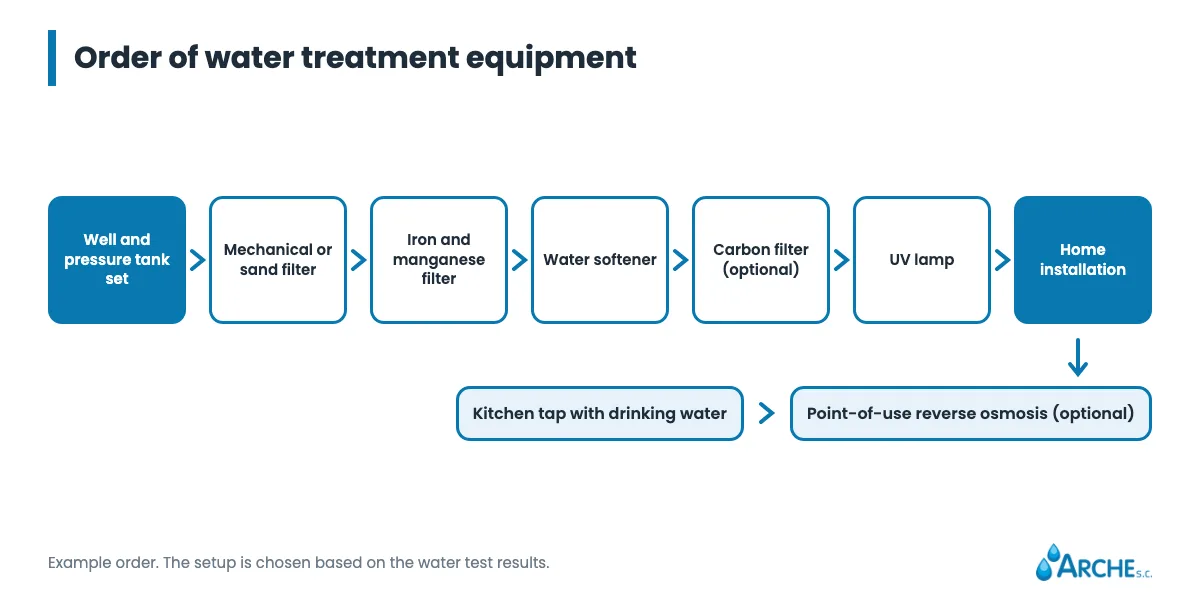
Treatment equipment is selected based on the raw water results, the flow rate and the servicing conditions. A single filter does not automatically solve every problem.
Prepare a complete set of data
Provide the full test report, not just a list of parameters highlighted in red. Add the number of users, the simultaneous flow, the pump data, the installation location and whether the backwash water can be discharged.
In the quote, ask for a description of the purpose of each stage and its operating conditions. Check the device parameters at the required service flow and during backwashing, if the technology needs it.
Do not confuse the functions of devices
| Solution | What to clarify before buying |
|---|---|
| Mechanical filter | Which contaminants it retains, what pressure drop it causes and when it needs servicing. |
| Iron and manganese removal | The operating conditions of the technology for the full composition of the tested water. |
| Softening | Target parameters, consumption of materials and the method of regeneration. |
| Disinfection stage | Requirements for incoming water quality, flow, monitoring and maintenance. |
Do not assume that a mechanical cartridge removes dissolved contaminants, or that a hardness device replaces a microbiological assessment.
Count the running costs together with the purchase
Ask about backwash water, energy, consumables, cartridges and recommended inspections. Check access for replacing parts and what to do during a longer shutdown. Add the cost of discharging the water from servicing, if it follows from local conditions.
How to accept the result
Define the parameters the installation is meant to achieve, the operating conditions and the date of the check. Keep the commissioning settings and the test result after treatment. Compare the right sampling points so you do not mistake raw water for treated water.
If the problem returns, start with the documentation and measurement. Adding another filter without establishing the cause can make servicing harder and increase pressure losses.
Sources:
Checked 8 October 2026