


Heat pump boreholes
Our company will carry out professional drilling for your heat pump, giving you independence and lowering your fixed costs!
- High-quality heat pump boreholes
- Gain independence
- Lower fixed costs

Why heat pumps?
If you are looking for an efficient, eco-friendly and cost-effective heating system for your home, a borehole for a heat pump may be the ideal solution.
Heat pumps, which use energy from the ground, are becoming an increasingly popular solution among homeowners looking for an alternative to traditional heating systems. They are not only environmentally friendly but can also bring significant savings in running costs – find out more about the boreholes our company carries out.
Boreholes for heat pumps make it possible to use geothermal energy, which is stable, renewable and available regardless of the weather. Boreholes can be vertical or horizontal, depending on the layout of your land and the space available. Bearing in mind that every property is different, it is important to discuss your needs with a professional borehole contractor. Why choose boreholes for heat pumps? Geothermal energy is one of the cleanest energy sources. Heat pumps are eco-friendly, emit no harmful gases and can be the only source of heating and hot water in your home.
In addition, these systems are very efficient. They use energy from the ground, which is constant and independent of the weather, which means they are reliable all year round.
What is more, heat pumps are very economical. Although the initial installation cost may be higher than with traditional heating systems, the savings in running costs can make up the difference in a short time.
Advantages of owning a heat pump
The advantages of a heat pump certainly include:
High energy efficiency, because heat pumps are exceptionally energy efficient: they move heat rather than generate it. As a result they use less energy, which means lower heating bills.
Very environmentally friendly, because heat pumps use natural heat sources such as air, ground or water, which makes them an eco-friendly heating solution. They emit far fewer greenhouse gases than conventional heating systems.
They are also multifunctional, because they can not only heat but also cool your home, and some models can also supply hot water for domestic use.
Reliability: Heat pumps do not depend on fossil fuel supplies or on the weather (in the case of ground source heat pumps), which makes them a reliable source of heat all year round.
Heat pumps are very durable. Most models deliver efficient operation for 15-20 years, and some ground source systems can last even longer.

Free quote for a heat pump borehole
Fill in our heat pump quote form, or contact us by email or phone.
How do heat pumps work?
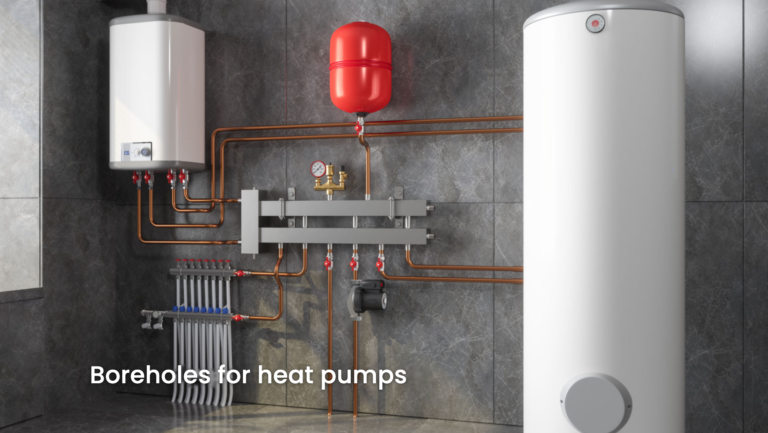
Heat pumps are a modern and efficient way of heating and cooling homes, as well as providing hot water. They are an alternative to traditional gas or oil systems that use fossil fuels. As the name suggests, heat pumps “pump” heat from one place to another. They can draw heat from various sources, such as air, ground or water, and then move it into the building.
Heat pumps work on a principle of thermodynamics which says that heat naturally moves from areas of higher temperature to areas of lower temperature. Heat pumps use this principle, but with the help of electricity they reverse the natural process, moving heat from areas of lower temperature (e.g. the air outside the building) to areas of higher temperature (the inside of the building).
The key element of a heat pump is the refrigerant cycle. A refrigerant is a substance that easily changes from a gas to a liquid and back again. Depending on its phase and position in the circuit, the refrigerant absorbs or releases heat.
The heat pump cycle starts at the evaporator, which absorbs heat from the surroundings (air, water or ground, depending on the type of heat pump). The refrigerant in the evaporator absorbs this heat and evaporates, changing from a liquid to a gas. The refrigerant is then compressed by the compressor, which raises its temperature. The hot gas passes through the condenser, where it gives up heat to the building’s heating system, and the refrigerant itself condenses, returning to a liquid state. This liquid then passes through an expansion valve, where its pressure and temperature drop, and the cycle starts again.
In cooling mode the heat pump works in reverse: heat is taken from inside the building and transferred to the outside environment. Some heat pumps are also fitted with a system that lets them heat domestic hot water, which makes them even more versatile.
See our projects
A heat pump step by step
- Assessment and design: We start with a detailed assessment of your property, taking into account the size of the house, insulation, the type and size of existing heating and cooling systems, and your personal preferences. Based on this information, our specialists design the heat pump system that will be most efficient for your home, in line with the latest standards and environmental rules.
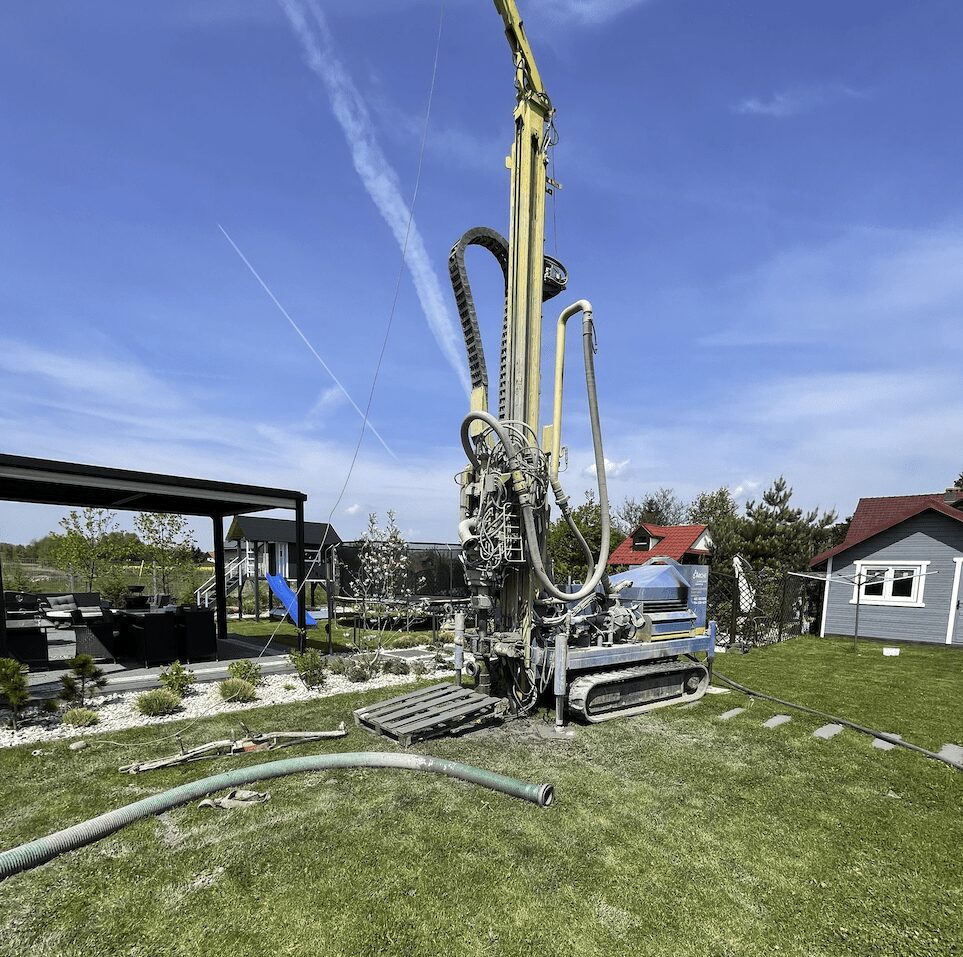
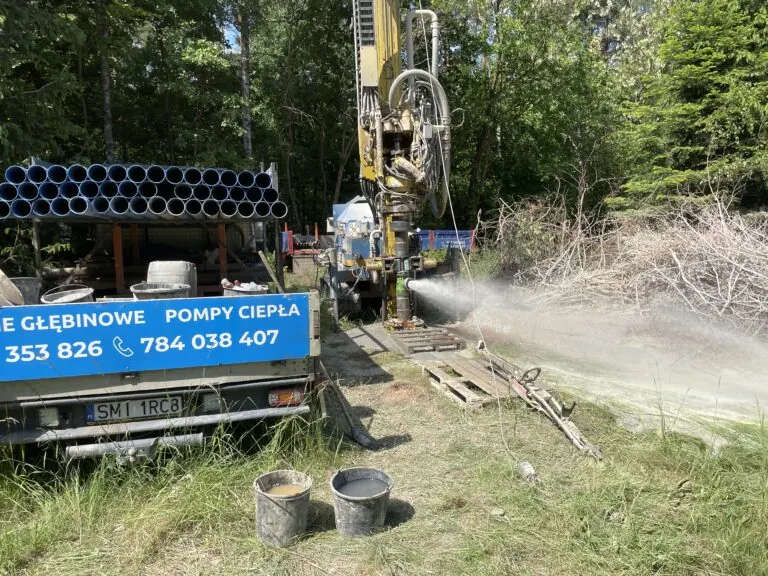
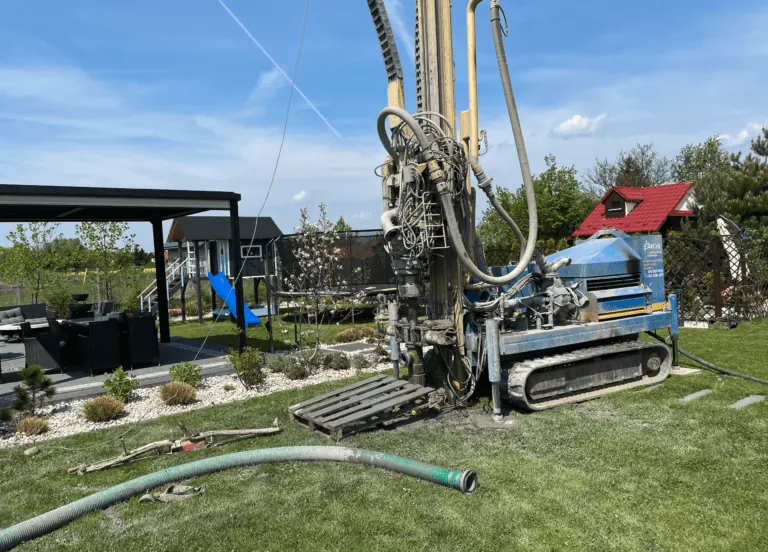
Drilling the borehole: Once the right type of heat pump has been determined, a team of specialists drills the geothermal borehole, which provides access to the constant source of heat stored in the ground. The borehole is drilled with specialist equipment, in compliance with all local regulations and safety standards.
Installing the heat pump: When the borehole is ready, the heat pump itself is installed. Depending on the model, the heat pump unit can be installed outside or inside the building. All connections are made carefully, and the system is tested for leaks and safety.
Installing the heat distribution system: Once the heat pump is installed, it is connected to the heat distribution system in your home. The distribution system may include underfloor heating, low-temperature radiators or an air conditioning system, depending on your needs and preferences.
Testing and calibration: When the installation is finished, the system is thoroughly tested and calibrated to ensure optimal performance. Every element of the system is checked for correct operation. At this stage our technicians are also available to answer any questions and help you understand how best to use your new system.
Maintenance and servicing: After installation, regular maintenance and servicing are key to keeping your heat pump efficient and long-lived. Professional servicing includes regular inspection, cleaning and, where necessary, replacement of parts, to make sure the system runs at maximum efficiency and safety for many years.
Heat pump boreholes
Why use our drilling services?
Top-quality services
Professional heat pump borehole
Lower costs
No more high bills

Installation safety
Two-year guarantee on all services
Arche price list
|
Service (borehole): |
Price from (net): |
|
Heat pumps |
PLN 160 per metre * |
Cost summary
The costs of installing a heat pump with a geothermal borehole can vary and depend on many factors. Here are some of them to take into account:
-
Borehole cost: Many factors affect the cost of drilling a geothermal borehole, such as its depth, the type of ground and the location. At ARCHE, the borehole alone for a heat pump costs from PLN 160 net per linear metre (as in our price list), and the total depends on the required borehole length. The required depth is usually determined by the size of the house and the characteristics of the ground in the area.
-
Heat pump cost: The price of the heat pump itself also varies and depends on the output of the unit, the technology, the brand and the model. On the Polish market, heat pumps with an output suited to the needs of an average detached house can cost from PLN 10,000 to PLN 50,000, or even more.
-
Installation cost: Installation costs cover the installer’s work, materials and any necessary modifications in the house. These costs can differ depending on the specific project, but can range from a few thousand to over ten thousand zlotys.
-
Heat distribution system cost: If your house is not already equipped with underfloor heating or low-temperature radiators, which are ideal for heat pumps, an additional investment may be necessary.
-
Running and servicing costs: After installation, regular maintenance and servicing of the heat pump are essential to keep it efficient. These costs are usually small compared with the potential savings that heat pump efficiency can deliver.
Although these costs can be significant, it is worth remembering the long-term benefits of investing in a heat pump. Heat pumps are far more energy efficient than traditional heating systems, which means they can considerably reduce your energy bills. In addition, various subsidy programmes and grants are available that can help reduce the initial cost of the investment.
Service guarantee: 2 years
We give a guarantee on every borehole for two years from the date the borehole is completed.
This guarantee covers not only the borehole itself and its tightness, but also the connection to the building.
The work carried out by our company will serve you without faults for many years. We give every customer a two-year guarantee.
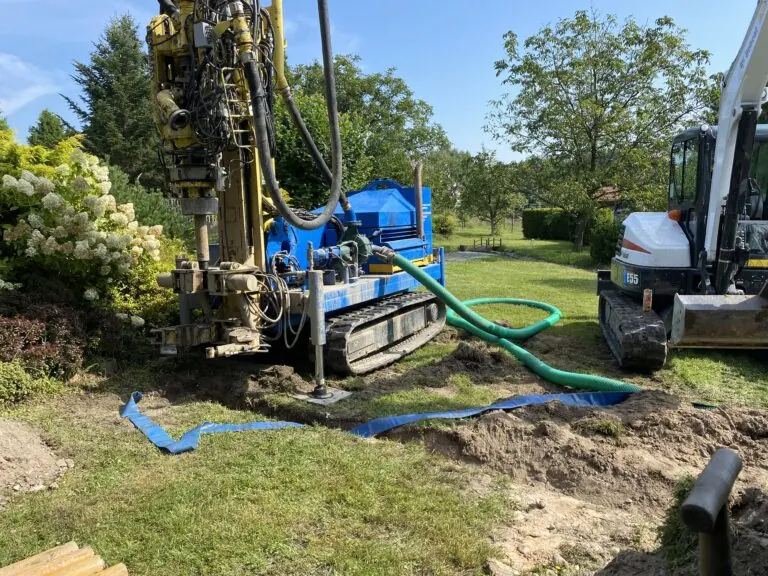
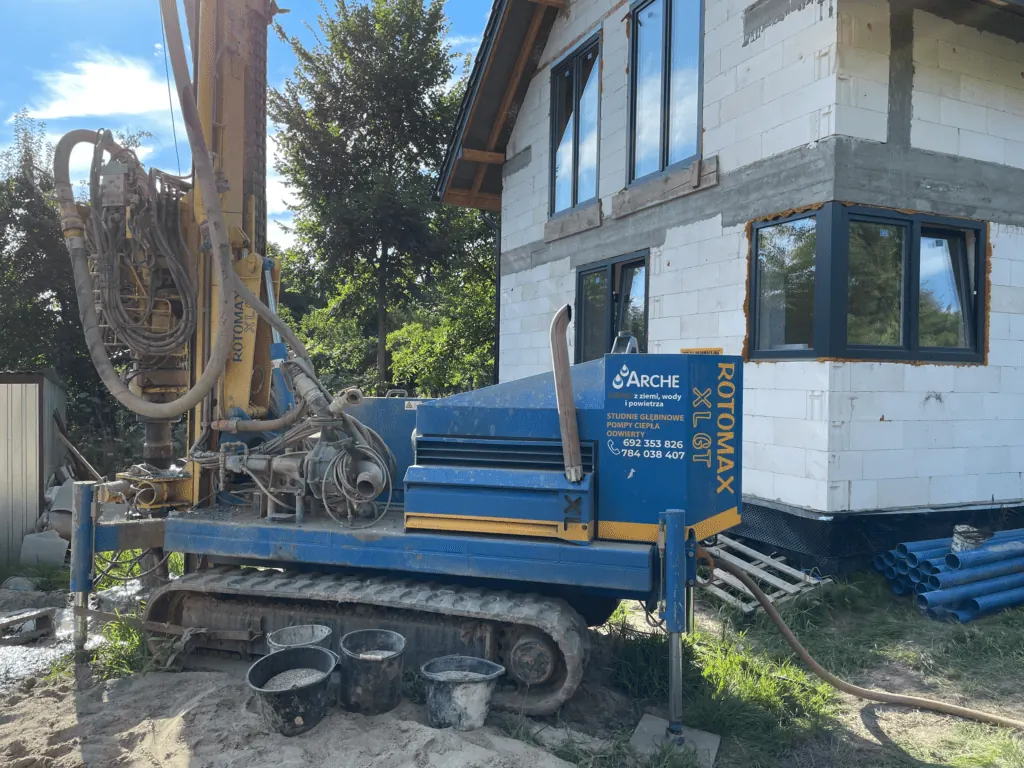
We have specialist drilling equipment
We drill with specialist equipment
Machine name: Rotomax XL GT
With us, you get a quality guarantee
A heat pump for your home or business

Heat pumps for homes
Heat pumps are currently the best way to get low bills for your home.

Heat pumps for businesses
Heat pumps for industry and commerce are a fairly popular solution, especially for car washes, swimming pools, thermal baths, spas and agritourism.

Heat pumps for agriculture
Industrial pumps that can move hundreds of metres of water per hour.
Free heat pump quote
Write to us or call
Find an answer
Answers to the questions our customers ask most often – Deep well Imielin
In most cases your neighbours’ consent is not required, but we recommend telling them about the planned work. In some situations, for example when the borehole is very close to the plot boundary, it may be necessary to obtain their consent. We encourage you to consult our office to discuss the details.
In most cases your neighbours’ consent is not required, but we recommend telling them about the planned work. In some situations, for example when the borehole is very close to the plot boundary, it may be necessary to obtain their consent. We encourage you to consult our office to discuss the details.